Imagine being a teenager with an unmistakable voice, stepping onto one of the biggest stages in the world and suddenly becoming a sensation overnight.
That is exactly what happened to Courtney Hadwin in 2018.
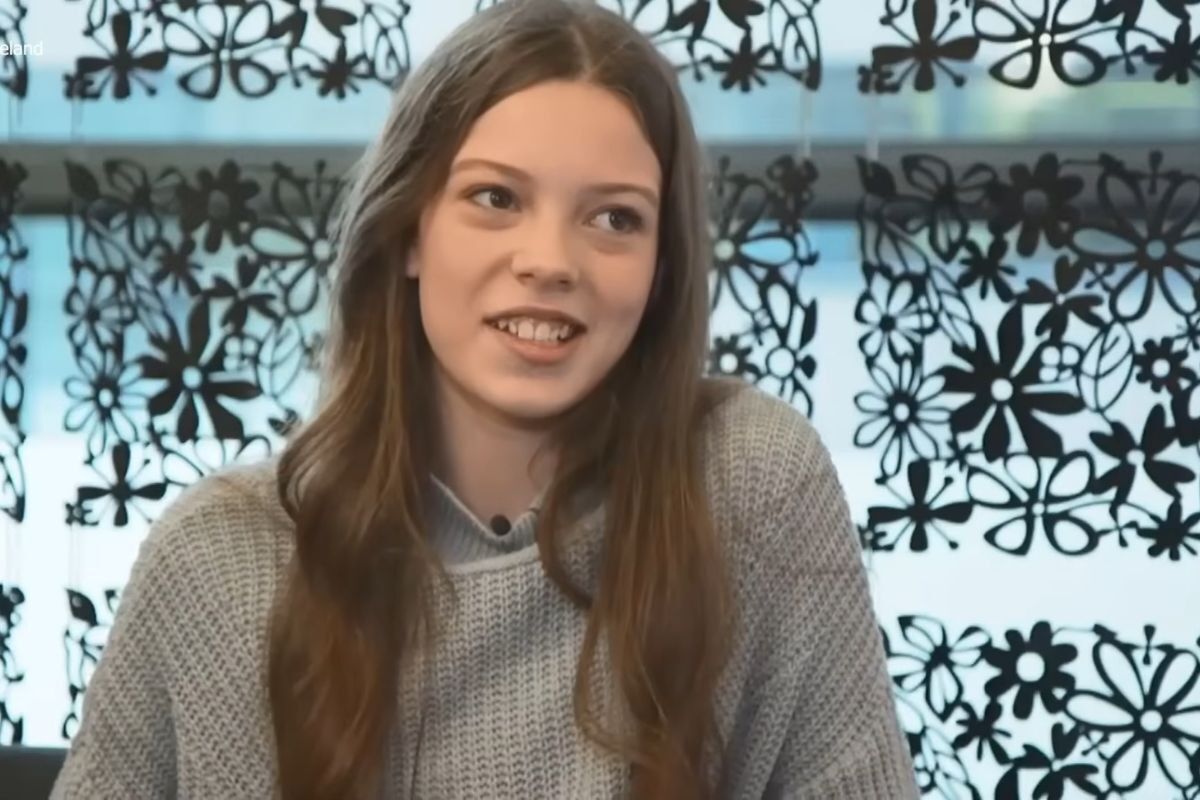
At just 14 years old, Courtney walked onto the America’s Got Talent stage looking like an ordinary, somewhat shy teenager. But the moment she started singing, everything changed.

Her explosive rock performance shocked the judges and the audience. The quiet girl who had seemed nervous moments earlier suddenly transformed into a powerhouse performer with an enormous voice and an intensity far beyond her age.
Almost overnight, Courtney became a viral sensation.
Her performances were watched by millions, and people began talking about her as one of the most unusual young talents the show had ever seen.
Soon, major opportunities followed.
Courtney signed a record deal connected with Simon Cowell’s Syco label, and for a teenager who had dreamed of becoming a professional musician, it appeared to be the beginning of everything she had hoped for.
But there was a problem.
The music industry didn’t necessarily see Courtney the way her fans did.
She had a raw, powerful, bluesy rock voice. She wasn’t simply another young pop singer.
Yet the people around her wanted to develop her in a more polished, mainstream direction.
Instead of allowing her to fully explore the gritty rock sound that had made audiences fall in love with her, Courtney was introduced to songwriters and producers associated with modern pop music.
For a young artist still trying to understand who she was, the pressure to fit into an established formula became increasingly frustrating.
The opportunity that had initially felt like a dream began to feel more complicated.
Courtney had entered the industry hoping to become an authentic musician.
Instead, she sometimes felt as though other people were trying to decide what kind of artist she should become.
Rather than abandoning her dream, however, she kept developing.
She continued singing.
She continued writing.
And most importantly, she continued searching for her own sound.
For years, fans waited to hear what Courtney would do next.
The teenager they remembered from America’s Got Talent was growing up, and with age came a stronger sense of identity and artistic independence.
Eventually, Courtney began moving back toward the sound that had made her famous in the first place.
Rock.
Blues.
Punk.
Raw emotion.
Instead of trying to sound like everyone else, she wanted her music to sound like herself.
That evolution eventually led to her 2025 album, Little Miss Jagged.
The project represented a major step forward in her artistic journey.
Working with producer Kevin Bowe, Courtney created music that embraced the rough edges of her voice rather than hiding them behind polished pop production.
The result was a sound filled with blues influences, rock energy, punk attitude, and the kind of emotional intensity that fans had been waiting years to hear again.
For many longtime supporters, it felt like they were finally meeting the real Courtney Hadwin.
Not the version shaped by television.
Not the teenager being molded for the music industry.
But the grown artist making decisions about her own sound.
Fans quickly responded.
Many praised her for refusing to abandon the qualities that made her different in the first place.
Some supporters described her as completely unique, while others encouraged her to protect the individuality of her voice and never allow anyone to take away what made her special.
And that became one of the most important lessons of Courtney’s journey.
Being successful in the music industry isn’t simply about having talent.
It’s also about knowing who you are.
Courtney discovered that fame can come quickly, but finding your artistic identity can take much longer.
At 14, she was suddenly being watched by millions of people.
At 20, she was still figuring out how to turn that early attention into a career that genuinely belonged to her.
Her story is therefore not simply about America’s Got Talent or becoming famous at a young age.
It’s about growing up in public, dealing with expectations, and learning to protect your individuality in an industry that often wants artists to fit neatly into a particular category.

Today, Courtney is no longer the nervous teenager who walked onto the America’s Got Talent stage and shocked everyone with her voice.
She’s an adult artist with a clearer understanding of what she wants to say and how she wants to sound.
Her music gives her a way to tell her own story—one shaped by the years of pressure, uncertainty, growth, and persistence that came after her first taste of fame.
The irony is that the very qualities some people might have considered difficult to market were the qualities that made Courtney unforgettable.
Her unusual voice.
Her intensity.
Her rawness.
Her refusal to sound ordinary.
Those characteristics were never weaknesses.
They were her identity.
And after years of searching, Courtney Hadwin appears determined to make sure that identity belongs to her—not to a record label, not to producers, and not to anyone else.
Her journey from a 14-year-old viral sensation to a more independent and confident musician is proof that sometimes finding your true voice takes years.
But when you finally do, you realize it was there all along. 🎤🔥🎸