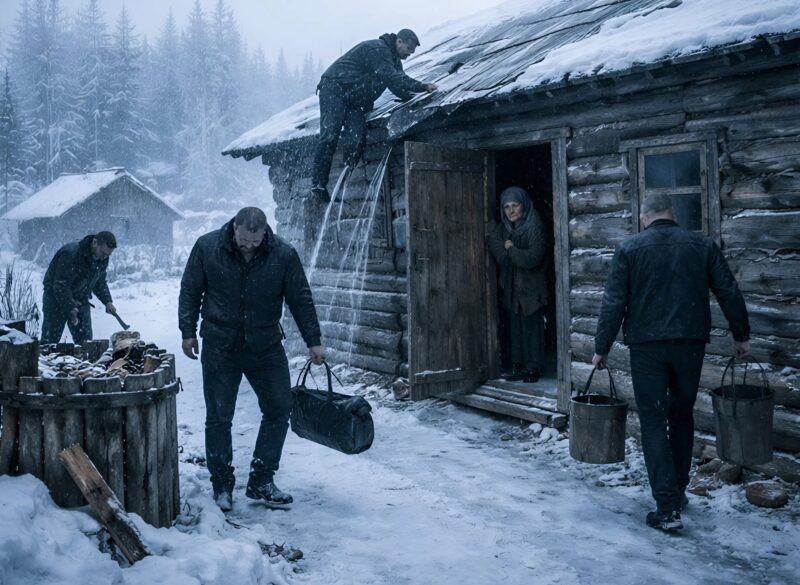
After losing the only person she had left, she remained alone in her aging wooden house with its sagging roof and frost-covered windows. Her pension barely covered necessities, her strength was fading, yet she refused to leave the place filled with memories. The neighbors helped occasionally, but she had grown used to managing on her own.
One harsh evening, a violent snowstorm swept through the village. The wind howled, snow buried the roads, and travel became impossible. As she warmed her hands by the stove, three heavy knocks suddenly rattled the door.
When she cautiously opened it, four broad-shouldered men stood outside. They wore dark clothing, tattoos visible on their hands and necks, and one carried a large sports bag.
“Ma’am,” the man in front said politely, “could we stay the night? The road is blocked. We’ll leave in the morning. We won’t cause trouble.”
She hesitated. She was alone, had little food, and knew the risk of inviting strangers inside. But sending them back into the freezing storm felt even more wrong.
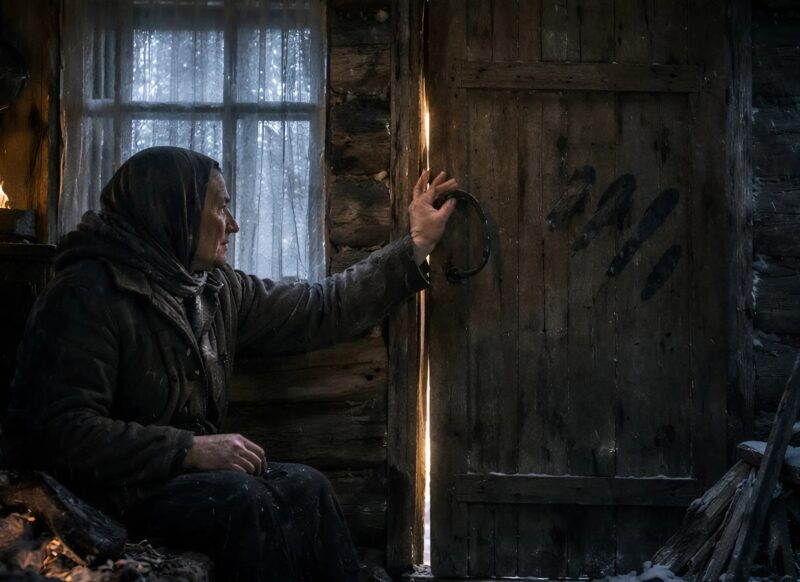
After a long moment, she stepped aside.
“Come in,” she said quietly.
Inside, the men behaved with unexpected respect. They removed their shoes, sat near the stove, and warmed themselves silently. She offered them the last of her bread and some hot water. At one point, when one of them opened the bag, she caught sight of something metallic and a thick roll of cash. She quickly looked away. These were clearly not ordinary travelers. Still, she said nothing.
That night, she barely slept, listening for any sign of trouble. But the house remained peaceful.
At sunrise, she heard movement outside. She peered through the window — and froze, though not from fear.
One man was repairing the leak in her roof. Another chopped and neatly stacked firewood. A third carried water from the well. The fourth fixed her crooked gate. They worked steadily and carefully, as if tending to their own home.