
A long-simmering feud between White House Press Secretary Karoline Leavitt and the hosts of ABC’s daytime talk show, “The View,” has erupted into a full-fledged public dispute, exposing stark ideological differences, charges of disinformation, and the challenges facing the Democratic party in expanding its base of support.Important questions about media responsibility, discrimination, and the direction of political debate have been raised by the contentious exchanges, particularly with Whoopi Goldberg. These exchanges have generated a lot of discussion both online and in media circles.
The first spark was ignited by Leavitt’s adamant responses and sharp rebuttals during press briefings, which questioned what she and many others see to be biased reporting and misrepresentations by major media outlets, including “The View.” For a long time, the talk show has been condemned for pushing a narrative that is consistently left-leaning, often at the expense of objective facts and reasonable opinions.
The hostility increased in later “The View” programs when the hosts addressed Leavitt’s remarks. Goldberg has reportedly been visibly uneasy on several times and has found it difficult to maintain narrative control due to Leavitt’s direct and caustic reactions to the show’s grievances, according to observers.”This isn’t just about personality clashes; it’s about a fundamental disagreement on the role of media in shaping public opinion,” stated Dr. Eleanor Vance, a professor of media studies at Columbia University. “Leavitt’s approach, which is to aggressively confront what she perceives as misinformation, is receiving positive feedback from a segment of the population that feels underserved by traditional media outlets.”

The dispute has also raised awareness of the challenges faced by prominent media personalities when confronted with new ideas and divergent opinions. Leavitt’s rapid rise in the Republican political sphere and her willingness to publicly challenge the narratives of the mainstream media have surely created a stir at “The View,” a show with unchallenged authority for a long time.
Social media users have responded to Goldberg’s comments in a particularly striking way. Many users have criticized her for her alleged emotional outbursts and inability to effectively counter Leavitt’s arguments, arguing that the show has turned to personal attacks instead of having fruitful discussions.”The overwhelming sentiment online seems to be one of dissatisfaction with legacy media figures who appear out of touch with the concerns of everyday Americans,” according to social media expert David Chen. “People are demanding accountability from these platforms and holding them to a higher standard of journalistic integrity.”
The feud is controversial for reasons other than personality conflicts. Due to a perceived lack of self-awareness and a disparity in comedy standards, many have questioned whether Goldberg and other “View” presenters’ answers to Leavitt’s words had any genuine comedic worth.Additionally, the media has been charged with disseminating misleading information, particularly concerning the qualifications and potential biases of newscasters. This analysis raises major concerns about the standards expected of journalists in today’s sharply divided media environment.
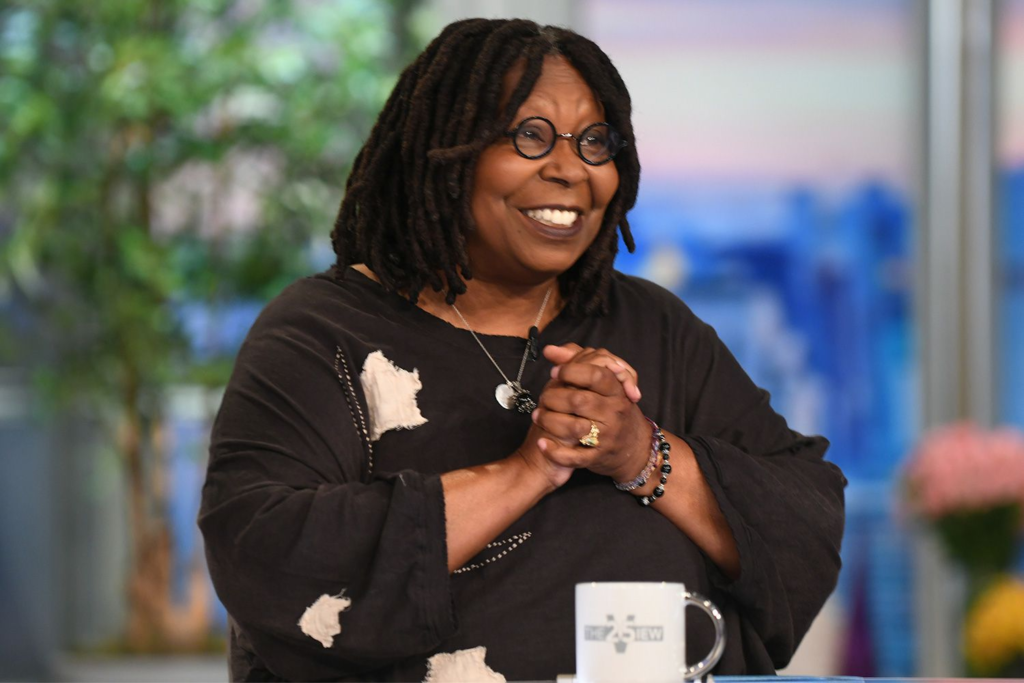
The criticism of “The View” has escalated since commentators Rita Panahi and Megan Kelly joined in. Kelly has referred to the show’s premise as a “hot mess,” raising questions about how it can continue to attract viewers while allegedly promoting misinformation, while Panahi has described it as a loop of exaggerated indignation meant to remain current.
These results are in line with a broader trend in the media landscape, where sensationalism is gradually displacing fact, fostering a disinformation-filled environment, and eroding public trust.More significantly, it has been asserted that a prominent left-leaning television personality has started publicly denouncing “The View’s” biased behavior, highlighting what they see to be a detrimental effect on fruitful political discourse. The left-leaning media landscape’s unique critique suggests that the need for more objectivity and a more sophisticated style of political commentary is becoming increasingly recognized.


