Our story begins in the mid-1800s, when inventors from over the globe were attempting to determine how to make the process of combining substances easier and more efficient. Ralph Collier, a tinner from Baltimore, created the first mixer with rotating elements in 1856. E.P. Griffith introduced the whisk, a revolutionary tool for combining ingredients, a year later. J.F. and E.P. Monroe’s hand-turned rotary egg beater, which was patented in the United States in 1859, was another noteworthy invention.
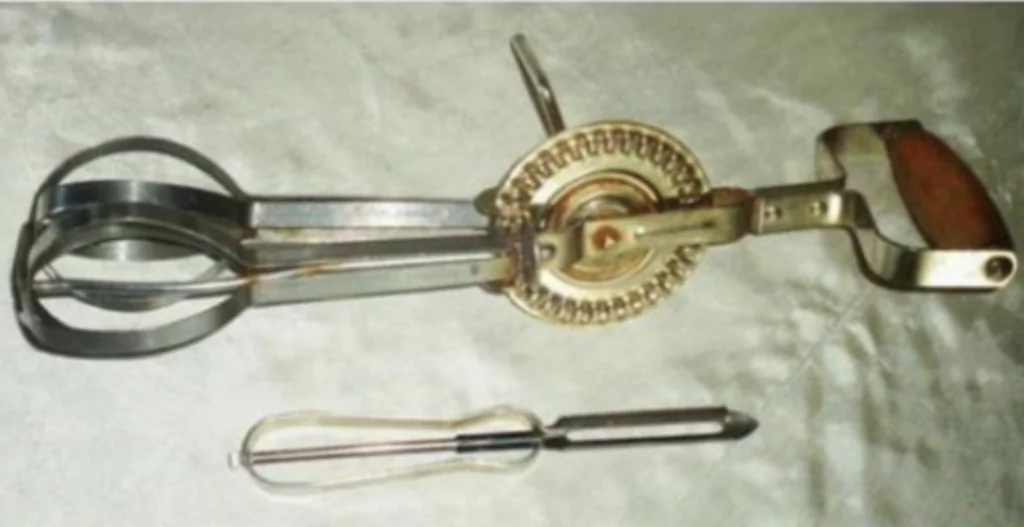
These early ideas caught the attention of the Dover Stamping Company, which bought the Monroe Brothers’ patent. In the US, the Dover egg beaters, commonly known as the “Dover beater,” were a well-known brand. These beaters were so well-liked that the famous Dover beater was featured in a delectable dessert dish called “Hur-Mon Bavarian Cream” from the Gazette newspaper in Cedar Rapids, Iowa, in February 1929.
The Age of Electricity Arrives
It wasn’t until 1885 that the first electric mixer was introduced, thanks to the ingenious ideas of American inventor Rufus Eastman. But it was the Hobart Manufacturing Company that really revolutionized the industry with their enormous commercial mixers. In 1914, they introduced a ground-breaking new model that fundamentally changed the market for mixers.
At the start of the 20th century, consumers began to choose two well-known American brands: the Sunbeam Mixmaster and the Hobart KitchenAid. However, residential electric mixers were still rare in most families until the 1920s, when they began to be utilized extensively for household applications.
The Stand Mixer: A Groundbreaking Device
In 1908, Herbert Johnston, an engineer with the Hobart Manufacturing Company, had a revelation when he observed a baker mixing bread dough with a metal spoon. He knew there had to be a better way, so he set out to create a mechanical equivalent to simplify the process.
By 1915, Johnston’s 20-gallon mixer was standard equipment in most commercial bakeries. Four years later, in 1919, the Hobart Manufacturing Company introduced the Kitchen Aid Food Preparer, also known as the stand mixer. This innovative invention quickly became a staple in kitchens across the country.
From the hand-turned rotary beaters of the 19th century to the development of electric motors and the stand mixer, this essential kitchen tool has undergone tremendous change. It has undergone several developments to make our lives in the kitchen easier.
The next time you prepare a lovely cake batter or bake some cookies, pause to think about the interesting history of your favorite mixer. It exhibits human ingenuity and the desire to simplify mundane tasks.
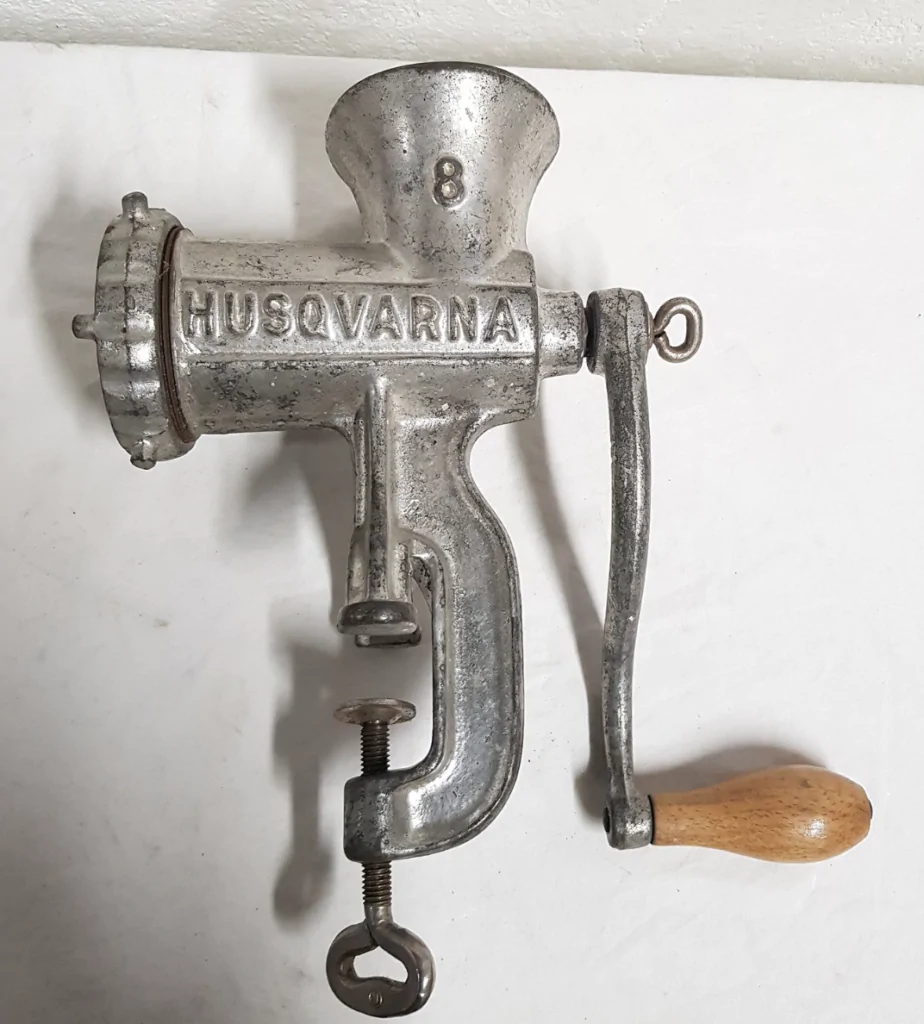
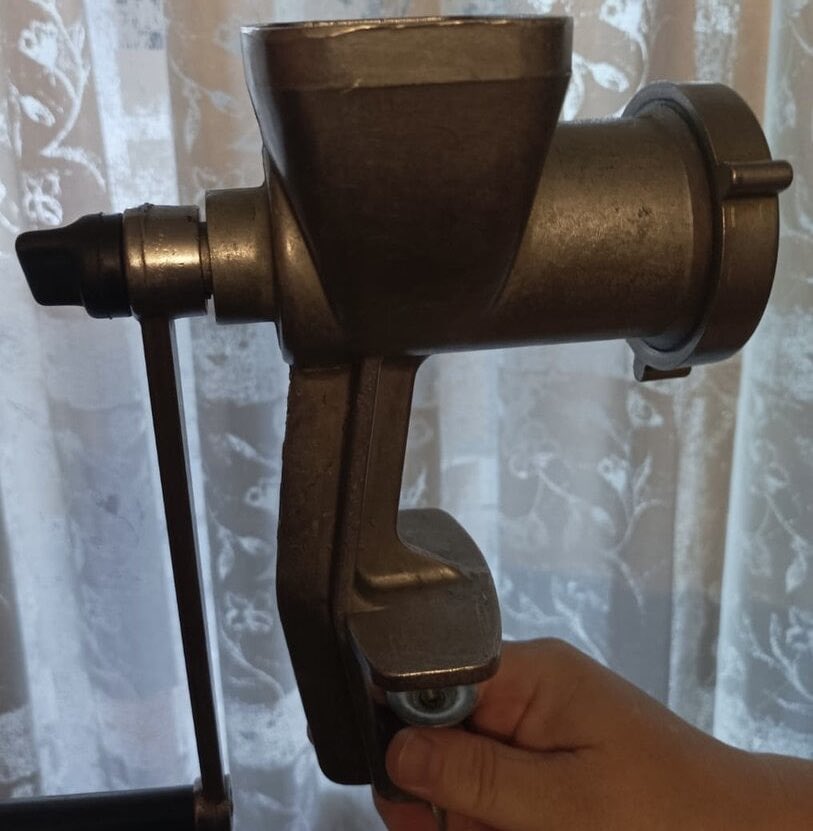
The meat grinder is another versatile kitchen tool with a fascinating history, in addition to the mixer. This tool has been used to chop and blend raw or cooked meat, fish, vegetables, and other components. In the UK, it is frequently called a “meat mincer.”
The history of the meat grinder began in the nineteenth century when Karl Drais invented the first version of this incredible machine. Initially, meat was ground into long, thin strands using hand-cranked meat grinders that pushed the flesh through a tiny hole in a metal plate.
As technology advanced and electricity became more widely available, manufacturers began to produce motorized meat grinders. With these modern electric grinders, several pounds of meat may be processed reliably and smoothly. Since some meat grinders also come with accessories that boost functionality, such as kibbe, juicing, and sausage-making, the variety of applications for these devices has greatly expanded.
Therefore, the next time you’re cutting meat for a savory dish or attempting to make your own sausages, remember the history and inventiveness of your meat grinder. It illustrates how kitchenware has evolved over time to facilitate and enhance our culinary adventures.