
Would you like to know more about the fascinating world of Russian prison tattoos? One of the most fascinating symbols you’ll probably come across is the three dots tattoo. In this essay, we’ll look at the various ways that this unique tattoo pattern has been interpreted.
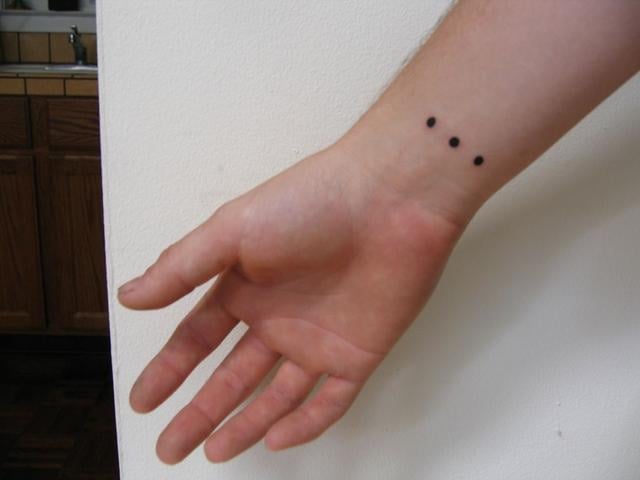
Importance and Justifications
On a tattoo, the three dots represent different meanings, each with a distinct significance. One explanation is its association with Buddhist monkeys, which are a sign of mystery and silence. According to this view, the people who have this tattoo would prefer to keep their personal affairs secret.
The number of dots in the tattoo allows for still another interpretation. It could represent the entirety of a person’s sentence in prison. The number of dots represents the amount of time the inmate has been behind bars. This symbolism serves to remind them of their prior experiences and the challenges they have faced.
The Horrible Reality About Prison Tattoos
Not all prisoners have ideal conditions when receiving tattoos. Since they are usually removed using improvised equipment and in dirty environments, they are difficult to remove. These works of body art serve as enduring reminders of the difficulties and imprisonment of the wearer.
Stigmatization and Discrimination
In addition to creating stigma and discrimination against ex-offenders outside of the jail system, these tattoos have symbolic meaning within the prison population. People who have tattoos may encounter prejudice from society, which makes it more challenging for them to reintegrate and find employment.
Acknowledging the significance of these tattoos is important, but it’s as important to treat everyone, regardless of heritage, with dignity and compassion.
Join us on this exciting journey as we delve further into the intriguing world of Russian prison tattoos and uncover the meaning behind these intriguing symbols.
Keep an eye out for more incredible stories and discoveries!
Taking Tattoos Out of Prison
It can be difficult to get rid of tattoos after serving time in prison. These tattoos are often applied in difficult circumstances, with handmade devices, and in unhygienic settings. As a result, in addition to usually being ugly, they may pose a health risk. However, skilled tattoo artists may gradually erase the tattoo by focusing laser technology on specific ink particles. It’s important to keep in mind that this process might cause pain and often requires multiple sessions.
Examples of Criminal History
Criminal investigations have benefited from tattoos in certain cases. For example, police were able to solve the case of a gas station robbery in Berlin because of the offender’s distinctive neck tattoo. In a similar line, a US gang member who got a detailed chest tattoo was later convicted guilty of murder. These numerous interpretations and depictions demonstrate the lengthy history of prison tattoos and their potential to support law enforcement in their pursuit of criminal justice solutions.
The Deeper Meaning of the Three-Dot Tattoo: A Hint of Crime and Freedom
With its deep symbolic meaning, the three-dot design on the left hand is one of the most well-known prison tattoos. The three dots represent the three Buddhist wise monkeys that are unseen, unspeakable, and invincible to evil. This portrayal is in favor of remaining silent regarding unlawful activities and downplaying criminal activity among inmates. It serves as a mark of distinction in the outer world and an oath of loyalty for those who have committed crimes.
The Importance of the Prison Tear
There is another common explanation of the three-dot tattoo that is linked to the “prison tear.” To represent their ten years behind bars, a prisoner may have a tear permanently inked. The amount of time someone has been confined determines how many tears they can shed. This tattoo thus represents the seriousness of the crime committed and the length of the prison sentence.
The Stigmatization of Ex-Offenders via Tattoos
Prisoners use their tattoos as identification outside of jail, even though they are usually applied under coercion. However, these tattoos also help to stigmatize and discriminate against ex-offenders. Because of the prominent tattoos, it is difficult to reintegrate into society and lead a normal life after serving time in prison.
In conclusion, the three dots on a tattoo can stand for a variety of concepts, such as loyalty, confidentiality, and the length of a prison sentence. It is important to keep in mind that these perceptions can vary based on the person and the setting. Nevertheless, the three-dot tattoo is still a widely known symbol associated with jail or a criminal past.
The three dots could represent a variety of meanings, depending on the context and the individual receiving the tattoo. The message behind the tattoo is deep. While it can also stand for individuality and resistance, it is usually associated with the criminal justice system and prisons.
The Tri-Dot Tattoo’s Origins and Importance
Buddhist iconography gave rise to the three-dot tattoo, which is typically placed on the left hand. It represents the three wise monkeys who can see, hear, and speak evil and are therefore invincible to it. Here, the three dots represent a rejection of violence and wrongdoing.
The connection between prisons and criminality
The tattoo of three dots is often linked to the criminal justice system and is interpreted as an indicator of aggressive criminal behavior. Others claim that each dot represents ten years in prison, with additional dots added for sentences exceeding ten years. Ex-offenders could view this tattoo as a shame and a reminder of their criminal past.
Individual Interpretation and Identity Formation
The three-dot tattoo has a connection to criminal behavior, but there are other interpretations of it as well. Some people choose this tattoo for aesthetic reasons or to display their rebellious side. It stands for their feeling of uniqueness and self-expression.
The Shadow Side of the Three-Dot Tattoo
It’s important to keep in mind that there is a darker aspect to the three-dot tattoo. It might be used as a marker by members of criminal organizations to show their connection. Others can view the tattoo in these circumstances as a threat or caution.
The Importance in the Context of Society
The three-dot tattoo has conflicting meanings in society. While some associate it with violence and criminality, others find it to be an intriguing identification symbol. The interpretation and perception of this tattoo are greatly influenced by personal experiences and preconceptions.
Taking Care of the Three-Dot Tattoo
Remember that not all people who have a three-dot tattoo are or have ever been involved in criminal behavior. Everybody’s history and reason for getting inked are different. Therefore, it’s best to refrain from stigmatizing people based just on their appearance and passing hasty judgments.
To sum up
In conclusion, the three-dot tattoo is a symbol with a complex significance that has been linked to criminal activity, revolt, and individualism. It is critical to consider the various interpretations and circumstances in order to avoid stigmatizing people just on the basis of their appearance and promoting prejudice.
To sum up, the three dots tattoo stands for strength, perseverance, and overcoming obstacles. It serves as a statement of the wearer’s distinct experiences and carries different meanings for different people. It’s a multifunctional tattoo with deep significance.
As we become older, our hobbies and tastes change. It is imperative to produce content that appeals to older audiences, particularly to those between the ages of 45 and 65. Our primary objective in this effort is to modify an article so that it better suits this specific audience while retaining its core meaning.
Acknowledging the Challenge
The article we are working with includes headlines, quotes, paragraphs, and pertinent photos. It is provided in Markdown format. Our goal is to provide an accessible and easily understood version that speaks to and resonates with older readers. Let’s go ahead and explore the guidelines now!
YouTube: https://youtube.com/watch?v=zBeNP70GKOU%3Ffeature%3 – Interesting Videos for Elderly ViewersGet Embed
Creating engaging content is essential when writing for an older audience. To do this, we need to consider their preferences and areas of interest. Let’s examine some effective strategies:
1. Simplify Language and Concepts
Using complex jargon or technical terms may turn off elderly readers. It is imperative to communicate using everyday language that is clear and intelligible. Talk succinctly and plainly; exclude unnecessary stuff.
2. Utilize Pictures
Visuals have a major role in maintaining the interest of older readers. To increase comprehension and pique viewers’ interest, include relevant images and videos. Images can enhance the reading experience in addition to triggering emotions.
3. Keep an Eye on Related Topics
When selecting topics, consider the needs and interests of senior listeners. Addressing issues related to health, retirement, leisure, and personal growth may be particularly enticing. Bring the information up to date by adding incisive analysis and practical advice.
4. Arrange Information Efficiently
Ensure that the article has a clear structure and is easy to read. Use headers, subheadings, and bullet points to make text easier to read. This facilitates older readers’ comprehension of the article’s logic and helps them find the information they need with ease.
To sum up
When adapting an article for an older readership, it is crucial to take their interests and preferences into account. By using pictures, focusing on relevant topics, simplifying language, and effectively organizing information, we may create engaging and captivating content. Remember that writing that is approachable and easy to understand is necessary to engage older readers. Let’s work together to create material that engages readers and makes reading fun!


