
The summertime obsession with finding the perfect watermelon enhances the fun of summertime get-togethers and picnics. In order to ensure that your summer days are filled with the refreshing flavor of this beloved fruit, we have caught the essence of selecting a watermelon that looks to be both ripe and delicious.
Recognizing Ripe Watermelon
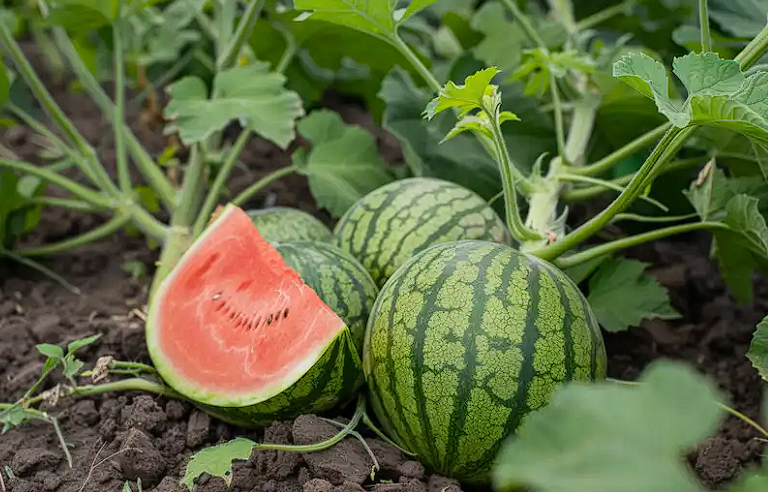
The journey to the perfect watermelon begins at the stem. A brown stem indicates a watermelon that has reached full maturity by naturally ripening on the vine by absorbing the nutrients and warmth of the sun. Conversely, a green stem suggests that the fruit was harvested too soon and its sweetness had not fully developed.
The Significance of the Yellow Spot
One of the main indicators of watermelon ripeness is the presence of a yellow spot. This region, commonly observed on the fruit’s belly, offers information on the watermelon’s solar bathing experience. It is more ripe when it has a distinct yellow area, which indicates that it has had adequate sun exposure. On the other hand, if there is a tiny white spot or none at all, the fruit was not exposed to the sun, which would have led to a less mature fruit.
Assessing Clarity and Solidity
The color and texture of a watermelon can reveal vital information about its internal health. When a watermelon yields slightly when pressed gently, it is considered ripe. If the watermelon appears extremely rigid and unyielding, it is underripe. Tapping a watermelon can also reveal its water content; a hollow sound suggests that the fruit is juicy, while a dull sound could imply that it isn’t.
Using Theory in Practical Setting
Armed with these senses, the search for the perfect watermelon becomes an informed investigation for specific features: a brown stem, a discernible yellow patch, a slight give in compression, and a hollow sound when tapped. When all of these conditions are satisfied, you can be sure that the watermelon is not only perfectly ripe but also exceptionally delicious and juicy.
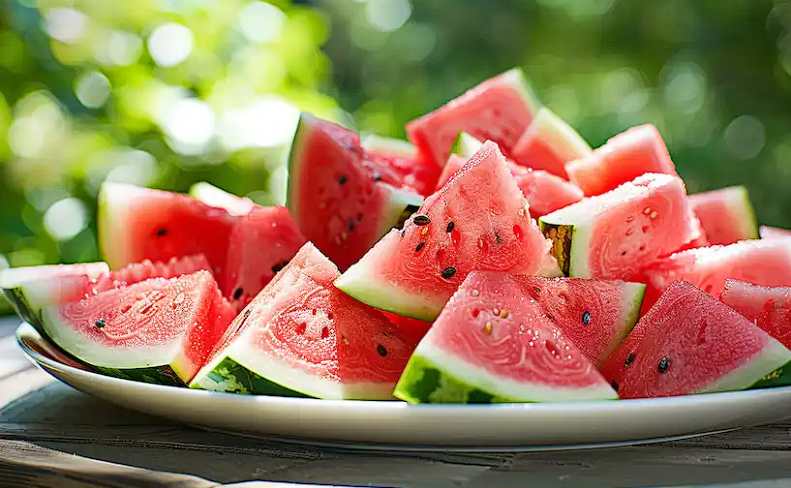
When you finally get around to eating the watermelon you’ve chosen at home, that’s when it all comes together. A mature watermelon’s deep crimson flesh indicates its great flavor. It will be juicy with fluids that testify to its maturity, and its texture will be crisp but supple. When the watermelon’s sweetness meets the standards of a carefully selected fruit, a tasting test provides the final confirmation.
Enjoying the Outcomes of Your Labor
Selecting the perfect watermelon involves using touch, hearing, and observation. The result of this time-consuming selection process is a watermelon, which adds a delightful sweetness and perfect amount of moisture to summertime meals and gatherings. Whether it is eaten in slices, cubes, or as part of a refreshing salad, the perfect watermelon is a monument to the joys of summertime cuisine.
In conclusion, the search for the perfect watermelon requires meticulous attention to detail and an appreciation of nature’s subtle cues. By following these guidelines, you may enhance the quality of your watermelon selection process and ensure that each fruit you bring home meets the standards for ripeness and sweetness. Take on the task and let finding the perfect watermelon become a beloved summertime ritual.


