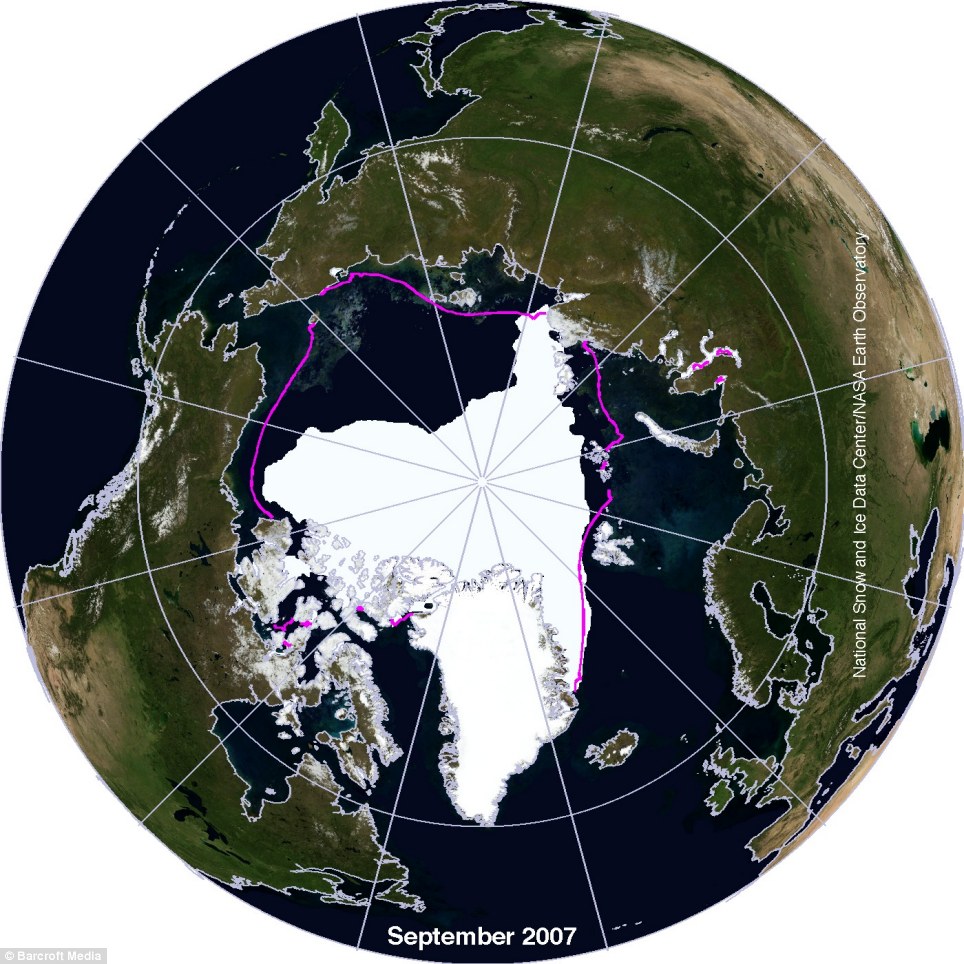
Since NASA started monitoring the Arctic with satellites, September 19, 2023, has seen the sixth-lowest minimum ice extent. The Antarctic experienced its lowest-ever maximum ice coverage at the same period. Although this worrying trend is not new, it appears to be intensifying.
There has been a consistent decline in Arctic sea ice since NASA began monitoring the region from space in 1978. According to recent estimates, by the 2020s or 2030s, the Arctic may be largely free of ice in September. Now, to be “ice-free” is to have less than a million square kilometers of ice, not to have completely disappeared. The Arctic still contained 4.23 million square kilometers (or 1.63 million square miles) of ice in 2023, at the minimum ice period. Regardless of how emissions pan out, summer ice in the Arctic could recede to approximately 24% of its 2023 level by the 2030s.
Experts predict that this declining tendency will continue, with more ice-free days in August and October as well as in September occurring more frequently in the Arctic by 2067. On the other hand, we could postpone this result if we reduce greenhouse gas emissions. Because Arctic ice is extremely sensitive to carbon emissions, prolonged periods of time without ice may be delayed if emissions are reduced.
These forecasts are the result of thorough investigation that examines numerous studies, not just one. There could be grave repercussions, particularly for species that depends on sea ice. For example, polar bears are struggling as their habitat diminishes and depend on sea ice for hunting. Additionally, less Arctic ice facilitates ship navigation, which may be advantageous to business interests.
More businesses are interested in doing business in Russian-controlled Arctic regions, particularly those from China. There are now more hazards to wildlife, especially marine species like blue whales, as a result of the growth in shipping. Whales already have difficulties communicating, and ship noise can exacerbate these issues.
Furthermore, by lessening the earth’s albedo impact, melting Arctic ice accelerates global warming. Less ice means less surface area to reflect sunlight, which causes the oceans to absorb more heat. Heatwaves will become more frequent and intense as a result of the melting occurring more quickly and the pace of warming increasing. The cycle of melting and warming is unbreakable.
Despite the dire nature of these forecasts, there is still hope since the Arctic responds swiftly to climatic shifts. In contrast to glaciers, which take a very long period to build, Arctic sea ice can regrow quite quickly provided emissions are reduced. This emphasizes how vital it is to combat climate change in order to save the ecology of the Arctic.