While manicures can cover any bumps or ripples on your nails, shiny polish cannot hide the sickness that may be hidden within your body.
Your overall health is reflected in your nails, so any abnormalities could be a sign of a heart, liver, or lung problem.
When our nails change, it can be a sign of several diseases or simply a reflection of aging. Our nails often provide a window into our interior health.
According to the National Library of Medicine (NCBI), ridges on “nails may also provide an insight into more sinister systemic manifestations,” which indicate underlying medical issues, but stripes on nails can be harmless.
The many types of nail stripes, their potential significance, and whether to consider seeking medical attention will all be covered in this piece.
Types of Nail Stripes
Vertical stripes
Typically, common longitudinal striations—also referred to as vertical stripes—run from the cuticle to the tip. Nail ridges are commonly associated with aging since they can become more prominent as people age.
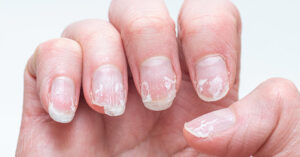
Sometimes, they could indicate nutritional deficiencies, such a lack of certain vitamins or minerals (iron, magnesium, or vitamin B12).
Vertical ridges associated with aging are common and mostly innocuous. However, if conditions like anemia or thyroid issues appear more suddenly or become more obvious, it may be worth checking for them.
Horizontal stripes
Horizontal stripes or grooves may signal more specific health conditions.
These horizontal indentations, commonly referred to as Beau’s lines, can be brought on by physical trauma to the nail or by serious medical conditions such diabetes mellitus, heart attacks, respiratory ailments, or malnourishment.
These ridges are often associated with short-term disturbances in nail growth caused by periods of severe stress or illness, as the body may temporarily slow down or cease nail growth.
The NCBI states that if the grooves develop “abruptly, [it] indicates a sudden attack of disease.” Furthermore, when it affects all 20 nails, it is “usually the consequence of systemic disease such as mumps, pneumonia, coronary thrombosis, Kawasaki disease, syphilis, and hypoparathyroidism.”
White Stripes
White, parallel horizontal lines that do not pierce the nail surface may be a sign of liver or renal issues. These lines, sometimes referred to as Muehrcke’s lines, usually form on multiple nails simultaneously and tend to briefly vanish when the nail is squeezed.
A decline in blood protein levels, particularly albumin, can also result in these white streaks, which are commonly seen in patients with chronic liver disease or malnutrition.
If Muehrcke’s lines show up on multiple nails, consult a physician as this may be a sign of protein deficiencies or liver or kidney problems.
“Unhealthy dietary practices”
Most people have ripples, which can be avoided by buffing or adopting a healthy lifestyle.
A balanced diet rich in protein, vitamins, and minerals like biotin, vitamin E, iron, and zinc can eventually improve the appearance of nails.
In an interview with Healthline, Dr. Sara Norris, a naturopathic doctor from Los Angeles, states that poor nail health is typically a sign of inadequate nutrition or bad digestion.
“Blistered, weak, and peeling nails are the most common concerns I see in my clinic, and these symptoms are more often the result of a poor diet than of systemic disease,” she says.
Your nails are giving you vital health information, ranging from harmless signs of aging to potential indicators of underlying illnesses. Although most of the causes are easy to fix, they are a surefire indicator of poor health, so pay attention to what they have to say!