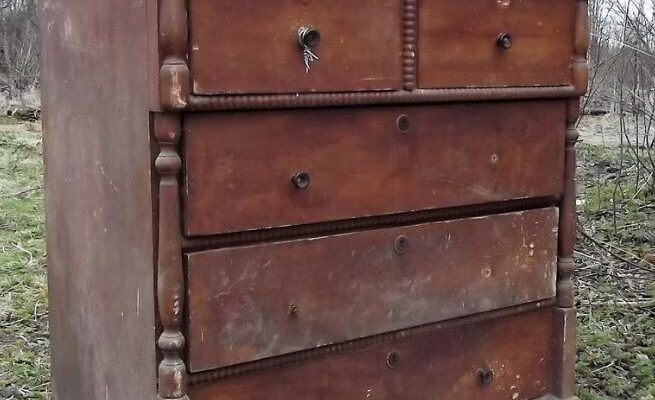
With just a metal brush and dish soap, we were able to remove the old finish with ease. Since plywood and pine aren’t ideal materials and the dresser needed two missing drawers replaced, I made the decision to refinish it. Even if some people dislike painted wood, I think it depends on the design and style.

I made the following changes to the dresser: The “Moss Green” acrylic paint was the cheapest color I could find from Ozon, but I wasn’t happy with its quality. I used leftover acrylic paint from the shoe dresser project and rust-resistant gold paint from restoring a Czech dresser.

As for the wire mesh, it was already there in our home. patterns and ornaments made of wood. adhesives for building and wood filler. It is plywood that was left over after repairing an old garden table. I found ancient hinges and handle parts in a storage area. I used furniture staples, polishing discs, a saw, a circular saw, and a screwdriver.

Prior to painting, I began by sanding and degreasing the surface. I used some paint leftover from the shoe cabinet project to paint the interior plywood shelves. For the exterior, I went for moss green. Despite being labeled as acrylic enamel paint, it seems more like a thick, pungent alkyd paint. Nevertheless, with only two applications, it provides excellent coverage.

To hide a rough seam, I used construction adhesive and tiny nails to secure the wooden molding to the top of the dresser. To replace the missing drawers, I constructed doors using prefabricated moldings that I reinforced with brackets and stapled and glued. Unfortunately, the wood has bent and dried out a little since I bought it in August.

I first folded the edges of the metal mesh used for the door faces, painted it gold, and then stapled it to the frame. Finally, I fixed the hinges and handles using vintage brass models I had in my collection.

The dresser is fully functional after being renovated! It might, however, find a more permanent home outside the porch given its condition.