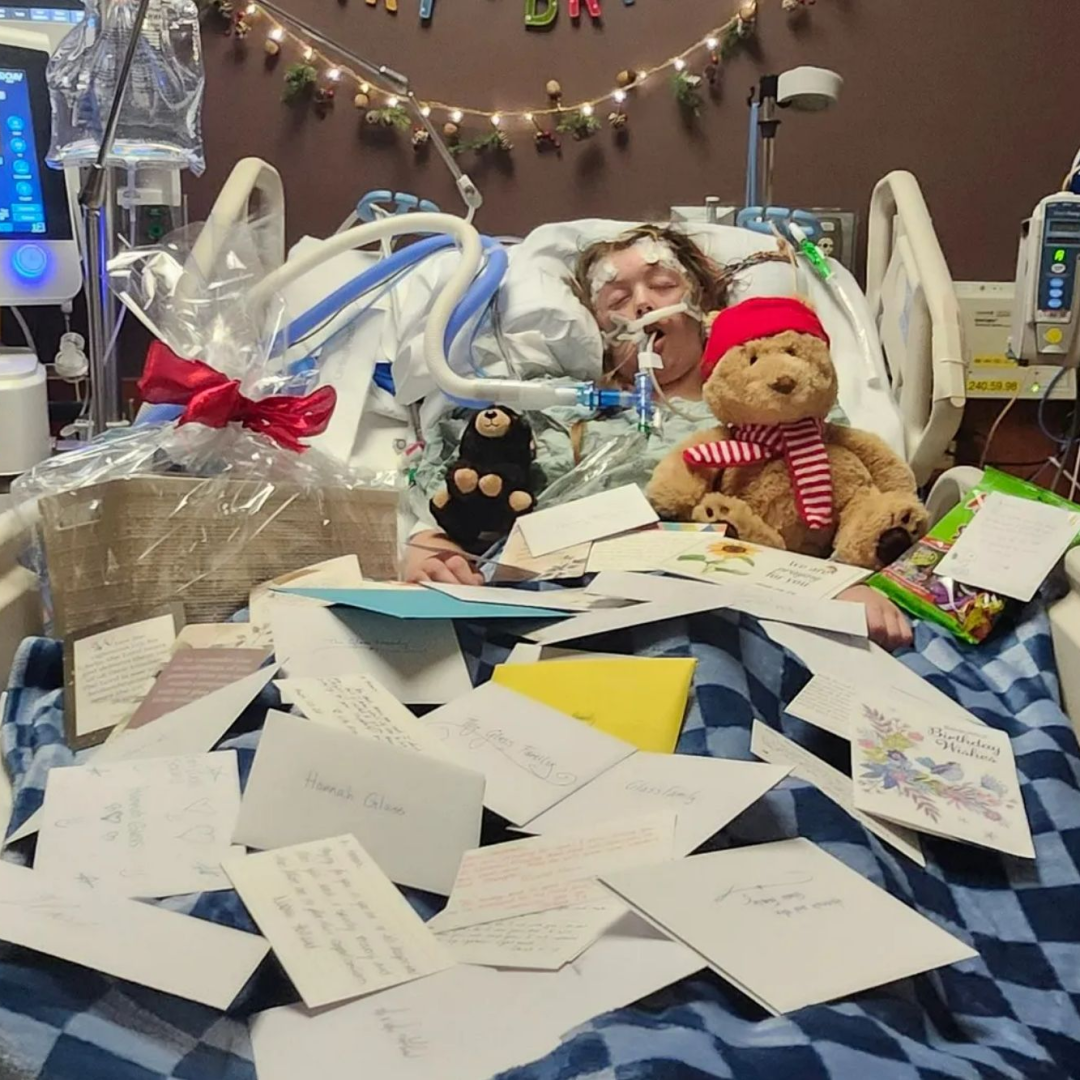
A few days after Hannah Glass decided to eat a baked brownie, she had no idea that her parents would be picking up her cremated ashes. The college student had always known she was sensitive to peanuts, but after only two pieces of the candy, something in it killed her.
Glass’s 19th birthday was only two days ago.
A sudden allergic reaction to a brownie claimed the life of Hannah Glass, a lovely and intelligent student at Maranatha Baptist University. A Wisconsin community is in grief following her passing.
On November 5, a friend gave the young woman, who had just turned 19, a brownie, to which she responded violently. Despite her reported peanut sensitivity and overall caution, the adolescent was unaware that the candy supposedly contained roasted peanut flour, a gluten-free alternative.
“After the second bite, she knew something was wrong,” Hannah’s father, David Glass, told WISN. The father continued by stating that while the brownie was made using peanut flour to accommodate students who are gluten intolerant, people with severe peanut allergies were not taken into consideration. Her acquaintance had brought the brownie from a campus women’s organization to his daughter.
Janean, the mother of David and Hannah, rushed from their home in Milton, Wisconsin, to the school residence in Watertown, which was approximately forty-five minutes away. “We think this was concealed because this product included roasted peanut flour, which is distinct from oily peanut butter,” David continued.
“The right lung collapsed.”
Hannah’s reaction was fierce and quick. Her father reported that she had vomited up, experienced rashes, and found some relief with Benadryl.
However, when she crawled up to her top bunk to rest, her condition abruptly changed.
Hannah’s roll onto her side was the most severe anaphylactic reaction we had ever seen. “This made her gasp for air, which resulted in the lung collapsing, further aggravating the situation,” the anguished father says in the Facebook post he shared on November 11.
Hannah climbed down the ladder from her bed and lost consciousness “part way down” before getting her EpiPen.
In his letter, the father stated, “I picked up Hannah.and took her outside to await the arrival of the paramedics. “She was totally unresponsive, and I was completely helpless.”
Despite the paramedics’ best attempts to revive her, Hannah’s heart had stopped beating for four minutes. She was immediately rushed to Watertown Hospital, then transferred to Froedtert Hospital, where she was placed on a ventilator.
The brain is “terminally damaged.”
Her family watched helplessly as doctors fought to save her life, but the damage was too extensive.
David claims on Facebook that “the majority of her brain was unmistakably, seriously, critically, and without the life-sustaining measures in place, TERMINALLY damaged” following many seizures. Consequently, there was “severe brain swelling.”
No one talked about life quality or anything like that. It really was a life-or-death situation!
Despite the tireless efforts of medical professionals, Hannah’s brain was irreparably injured and there was no hope of her recovery.
“A continuous walk”
Before being taken to the operating room to donate her organs, Hannah was given a poignant tribute during a traditional “Honor Walk” prior to her final farewell on November 10, 2024.
About 300 people lined the walls of the hallway as her family followed her until their “final goodbye.”
“The walk seemed to go on forever, but it was going too quickly,” David remarked.
“Having her home is nice.”
We picked up Hannah’s cremated remains. It was and still is a strange jumble of emotions. “There is still a strong sense of disbelief,” David writes in a November 22, 2024, Facebook post. While having this tangible, real reminder of her body and presence is beneficial in that it gives us something to gaze at and “cling to,” it is also rather disheartening because our relationship is unquestionably different now. It’s good to have her back home, though.
Her parents are now reminding others with food allergies to “always be aware.” “Make sure your EpiPens are up to date,” David said.
Hannah’s organs have already helped four people in urgent need of life-saving transplants.
The story of Hannah Glass is a potent reminder of both the need of understanding food allergies and the frailty of life. In addition to the lives she saved, her legacy lives on in the hearts of those who knew and loved her.